
“My broad vision is to see the end of the Reformation of the 16th century," Archbishop John Hepworth, head of the Traditional Anglican Communion, a breakaway Anglican group, told me back in 2005.
Together with his bishops, all of whom left the Anglican Communion over the issue of women priests, he was determined to blaze a trail back to Rome and take like-minded Anglicans with him.
After much discussion and head-banging, a significant step was made towards that goal last week after Pope Benedict XVI announced he was preparing a provision which would facilitate large groups of disaffected Anglicans (Episcopalians in the U.S.) to come into communion with Rome.
Such an initiative has been under consideration for at least four years, but only in the past year has the Holy See, strongly backed by the Pope, seriously taken it forward as requests for some kind of structure sharply increased. It’s true that the Vatican only informed Dr. Rowan Williams, the Archbishop of Canterbury, about the precise nature of this provision only two weeks before last Monday’s announcement.
What was not said, however, was that Dr. Williams has known this was on the cards for at least two years. He was said to be implacably opposed to it, but really had no choice but to give it his blessing. This new provision breaks with traditional ecumenical dialogue that has taken place over the past 40 years. Instead, it is a kind of “ecumenism through the back door” or, as some might prefer to see it, a fast track to corporate union with the Catholic Church without vacuous theological discussions.
It may even become the only viable form of ecumenical dialogue between the two confessions in the future. Past dialogue helped build cordiality and friendship, but as worldwide Anglicanism drifted further and further away from Catholic doctrine, it did little more than comfort the Anglican Communion as it has continued towards its demise.
It’s still not clear how many traditionalist Anglicans will want to cross the Tiber and be received into the Catholic Church under this new structure. The Traditional Anglican Communion alone is said to have 400,000 members and is growing. It has a province stretching from Guatemala to Argentina, with a large presence in Colombia and Chile formerly made up of Episcopalian missionaries. It is also regularly welcoming new parishes and dioceses in southern India. Numbers of traditionalist Anglicans from groups such as Forward in Faith in the U.K. are said to be in their hundreds.
Once these structures are in place, these numbers are likely to grow, especially if the Anglican Communion continues to be largely led and controlled by theological liberals. Forward in Faith has just been having a meeting in London to discuss the Pope’s provision. Hepworth, meanwhile, is having each of his national synods vote on the Pope’s plan, and expects all his bishops to unanimously approve it. He is delighted with the new provision. “Everyone thought it would be a minimal deal,” he said. “But it’s a maximal deal, a glorious deal.”
Symbolically, and with sweet irony for Australian Hepworth, the first such synod likely to approve it will be England’s, the birthplace of Anglicanism, at a meeting on Thursday.
Monday, October 26, 2009

Thursday, October 22, 2009
The Apostolic Constitution and the Reconversion of England

Could the Apostolic Constitution signify the re-conversion of England has begun in earnest?
Blogger Scott P. Richert interestingly points out on the website About.com that it may well do, given its timing.
Richert writes:
“Pope Benedict XVI is very sensitive to the message that certain dates send. Summorum Pontificum for instance, was signed on June 29, the Feast of Saints Peter and Paul, when the Orthodox Ecumenical Patriarch sends representatives to Rome each year to take part in the celebration of the Feast of Saints Peter and Paul (and sometimes comes himself). The Orthodox have long been concerned about the decline of the liturgy in the Western Church, and the revival of the Traditional Latin Mass was seen as a major step in the right direction."
Richerts continues: “October 20 is the feast day of Saint Paul of the Cross (1694-1775), the founder of the Passionists. Though Saint Paul spent his life in Italy, the Catholic Encyclopedia notes that "For fifty years he prayed for the conversion of England, and left the devotion as a legacy to his [spiritual] sons." Almost 65 years after his death, the Passionists were first introduced into England, and the Catholic Encyclopedia declares that "They came in the spirit of Apostles without gold or silver, without scrip or staff or shoes or two coats," yet they "soon revived without commotion several Catholic customs and practices which had died out since the Reformation. They were the first to adopt strict community life, to wear their habit in public, to give missions and retreats to the people, and to hold public religious processions."”
He concludes: “All of this may simply be a coincidence. But considering Pope Benedict's sensitivity to the symbolism of dates, I don't think so. In any case, on this historic day, we can join Saint Paul of the Cross in praying for the conversion of England.”
Backing up Richert’s theory is that Monday’s press conference surprisingly went ahead despite the Apostolic Constitution not being ready. Cardinal William Levada said the date had long been set for the announcement. The Register was told back in July that a date had already been fixed to publicize the new structures, but few, even those closely involved in the process, knew exactly when it would be.
Britain, and particularly England, has been considered mission territory for some time, particularly over the past decade, as it suffers from social breakdown, policies which disregard the sacredness of all human life, and widespread ignorance of its Christian – and particularly Catholic – roots.
Cardinal Cormac Murphy O’Connor, Archbishop emeritus of Westminster, famously said in 2001 that Christianity in Britain “has now almost been vanquished.”
Photo: Cambridgeshire countryside
Tuesday, October 20, 2009
Pope Helps Disaffected Anglicans to Cross the Tiber
Pope Benedict XVI today historically approved canonical structures to allow Anglican clergy and faithful to be received into the Church while retaining elements of their distinctive Anglican spiritual patrimony.
Although I've known an announcement was in the works, it wasn't expected so soon and came as a surprise. The suddenness of the news is possibly part of an attempt to allay possible fallout ahead of the Pope's visit to Britain, and to help future consultation. It also comes in response to an increasing number of requests from groups of traditionalist Anglicans to come into communion.
The new structures would be open to members of the Episcopal Church in the United States, otherwise known as TEC (formerly ECUSA); the TEC is the main American branch of the worldwide Anglican Communion. They will also help regularize John Paul II's 1982 Pastoral Provision which allowed former Anglicans in the U.S. to come into communion while retaining their Anglican liturgies.
At a Vatican press conference this morning, American Cardinal William Levada, prefect of the Congregation for the Doctrine of the Faith, announced that an Apostolic Constitution has been prepared in response to “many requests” from groups of Anglican clergy and faithful wanting to enter into full communion with the Church.
The Apostolic Constitution, which Cardinal Levada said “provides a reasonable and even necessary response to a world-wide phenomenon”, will be a “single canonical model for the universal Church which is adaptable to various local situations and equitable to former Anglicans in its universal application.”
The new canonical structure, which aims to “preserve elements of distinctive Anglican spiritual patrimony,” will be made up of ‘Personal Ordinariates’. This means groups of Anglicans won’t be received as a bloc, en masse, but rather that bishops' conferences around the world will be able to create a special, supra-territorial, structure to accept Anglicans under the leadership of a former Anglican minister who would be designated a bishop.
The new structure will allow for married former Anglican clergy to be ordained. However, in common with Catholic and Eastern Rite Churches, married clergy will not be allowed to be ordained to the episcopate. Former married Anglican bishops will also not be allowed to be bishops in the new structure.
These ‘Personal Ordinariates’ will be formed, “as needed, in consultation with local Conferences of Bishops, and their structure will be similar in some ways to that of the Military Ordinariates which have been established in most countries to provide pastoral care for members of the armed forces and their dependents throughout the world”, the cardinal prefect said.
He added: “The provision of this new structure is consistent with the commitment to ecumenical dialogue which continues to be a priority for the Catholic Church, particularly through the efforts of the Pontifical Council for Promotion of Christian Unity.”
Archbishop Augustine DiNoia, former under-secretary at the CDF who helped draft the new structure, said: “We’ve been praying for unity for forty years. Prayers are being answered in ways we did not anticipate and the Holy See cannot not respond to this movement of the Holy Spirit for those who wish communion and whose tradition is to be valued.” He said there has been a “tremendous shift” in the ecumenical movement and “these possibilities weren’t seen as they are now”.
Technical details still need to be worked out, and these Personal Ordinariates may vary in their final form, Archbishop DiNoia said. Full details of the Apostolic Constitution will be released in a few weeks but today’s press conference went ahead today because it had been planned sometime ago, Cardinal Levada said.
The Vatican’s note on the Constitution can be found here: http://212.77.1.245/news_services/bulletin/news/24513.php?index=24513&lang=en
The archbishops’ joint statement can be found here:
http://212.77.1.245/news_services/bulletin/news/24514.php?index=24514&lang=en
To underline the importance of this decision, and to perhaps lessen tensions, Archbishop Vincent Nichols of Westminster and the Archbishop of Canterbury, Rowan Williams, held a joint press conference in London today.
“The Apostolic Constitution is further recognition of the substantial overlap in faith, doctrine and spirituality between the Catholic Church and the Anglican tradition,” they said in a joint statement. “Without the dialogues of the past forty years, this recognition would not have been possible, nor would hopes for full visible unity have been nurtured. In this sense, this Apostolic Constitution is one consequence of ecumenical dialogue between the Catholic Church and the Anglican Communion.”
The two leaders said they hoped “this close cooperation will continue as we grow together in unity and mission, in witness to the Gospel in our country, and in the Church at large.”
Last week, Cardinal Walter Kasper, president of the Pontifical Council for Christian Unity, said “there is agreement” between Williams and the Vatican that anyone who wishes to be received must have their conscience respected. But Cardinal Kasper stressed “we are not fishing in the Anglican lake” and that ecumenical dialogue “is not aiming to proselytize.”
Breakaway Anglican groups who will benefit from the new structure include the Traditional Anglican Communion, an ecclesial body which claims to have 400,000 members worldwide. Its membership has swelled in the past couple of years, its leadership says, as the Anglican Communion has been torn by issues over homosexual clergy and bishops and the Church of England’s decision to ordain women as bishops.
The TAC broke from the Anglican Communion in 1991 over the decision of the Church of England to ordain women as priests. As well as other breakaway groups of traditionalist Anglicans, it has been hoping for such a canonical structure ever since.
The TAC formally made a request two years ago, after all its bishops symbolically signed a copy of the Catechism of the Catholic Church at a ceremony in England. The discussions that followed were protracted owing to the unique nature of such a structure, in particular over whether Anglicans should have their own rite.
Archbishop John Hepworth, the TAC’s primate, has played a key role in trying to bring the matter to a conclusion. He will no longer be allowed to be bishop in the new structure, but he has always said he is willing to step aside and let others lead the ecclesial body if such a structure would oblige him to do so.
The Apostolic Constitution will no doubt be discussed when Archbishop Williams visits the Holy Father and the Vatican next month. The visit was supposed to be routine and low-key, but that’s now unlikely after today’s announcement.
Although I've known an announcement was in the works, it wasn't expected so soon and came as a surprise. The suddenness of the news is possibly part of an attempt to allay possible fallout ahead of the Pope's visit to Britain, and to help future consultation. It also comes in response to an increasing number of requests from groups of traditionalist Anglicans to come into communion.
The new structures would be open to members of the Episcopal Church in the United States, otherwise known as TEC (formerly ECUSA); the TEC is the main American branch of the worldwide Anglican Communion. They will also help regularize John Paul II's 1982 Pastoral Provision which allowed former Anglicans in the U.S. to come into communion while retaining their Anglican liturgies.
At a Vatican press conference this morning, American Cardinal William Levada, prefect of the Congregation for the Doctrine of the Faith, announced that an Apostolic Constitution has been prepared in response to “many requests” from groups of Anglican clergy and faithful wanting to enter into full communion with the Church.
The Apostolic Constitution, which Cardinal Levada said “provides a reasonable and even necessary response to a world-wide phenomenon”, will be a “single canonical model for the universal Church which is adaptable to various local situations and equitable to former Anglicans in its universal application.”
The new canonical structure, which aims to “preserve elements of distinctive Anglican spiritual patrimony,” will be made up of ‘Personal Ordinariates’. This means groups of Anglicans won’t be received as a bloc, en masse, but rather that bishops' conferences around the world will be able to create a special, supra-territorial, structure to accept Anglicans under the leadership of a former Anglican minister who would be designated a bishop.
The new structure will allow for married former Anglican clergy to be ordained. However, in common with Catholic and Eastern Rite Churches, married clergy will not be allowed to be ordained to the episcopate. Former married Anglican bishops will also not be allowed to be bishops in the new structure.
These ‘Personal Ordinariates’ will be formed, “as needed, in consultation with local Conferences of Bishops, and their structure will be similar in some ways to that of the Military Ordinariates which have been established in most countries to provide pastoral care for members of the armed forces and their dependents throughout the world”, the cardinal prefect said.
He added: “The provision of this new structure is consistent with the commitment to ecumenical dialogue which continues to be a priority for the Catholic Church, particularly through the efforts of the Pontifical Council for Promotion of Christian Unity.”
Archbishop Augustine DiNoia, former under-secretary at the CDF who helped draft the new structure, said: “We’ve been praying for unity for forty years. Prayers are being answered in ways we did not anticipate and the Holy See cannot not respond to this movement of the Holy Spirit for those who wish communion and whose tradition is to be valued.” He said there has been a “tremendous shift” in the ecumenical movement and “these possibilities weren’t seen as they are now”.
Technical details still need to be worked out, and these Personal Ordinariates may vary in their final form, Archbishop DiNoia said. Full details of the Apostolic Constitution will be released in a few weeks but today’s press conference went ahead today because it had been planned sometime ago, Cardinal Levada said.
The Vatican’s note on the Constitution can be found here: http://212.77.1.245/news_services/bulletin/news/24513.php?index=24513&lang=en
The archbishops’ joint statement can be found here:
http://212.77.1.245/news_services/bulletin/news/24514.php?index=24514&lang=en
To underline the importance of this decision, and to perhaps lessen tensions, Archbishop Vincent Nichols of Westminster and the Archbishop of Canterbury, Rowan Williams, held a joint press conference in London today.
“The Apostolic Constitution is further recognition of the substantial overlap in faith, doctrine and spirituality between the Catholic Church and the Anglican tradition,” they said in a joint statement. “Without the dialogues of the past forty years, this recognition would not have been possible, nor would hopes for full visible unity have been nurtured. In this sense, this Apostolic Constitution is one consequence of ecumenical dialogue between the Catholic Church and the Anglican Communion.”
The two leaders said they hoped “this close cooperation will continue as we grow together in unity and mission, in witness to the Gospel in our country, and in the Church at large.”
Last week, Cardinal Walter Kasper, president of the Pontifical Council for Christian Unity, said “there is agreement” between Williams and the Vatican that anyone who wishes to be received must have their conscience respected. But Cardinal Kasper stressed “we are not fishing in the Anglican lake” and that ecumenical dialogue “is not aiming to proselytize.”
Breakaway Anglican groups who will benefit from the new structure include the Traditional Anglican Communion, an ecclesial body which claims to have 400,000 members worldwide. Its membership has swelled in the past couple of years, its leadership says, as the Anglican Communion has been torn by issues over homosexual clergy and bishops and the Church of England’s decision to ordain women as bishops.
The TAC broke from the Anglican Communion in 1991 over the decision of the Church of England to ordain women as priests. As well as other breakaway groups of traditionalist Anglicans, it has been hoping for such a canonical structure ever since.
The TAC formally made a request two years ago, after all its bishops symbolically signed a copy of the Catechism of the Catholic Church at a ceremony in England. The discussions that followed were protracted owing to the unique nature of such a structure, in particular over whether Anglicans should have their own rite.
Archbishop John Hepworth, the TAC’s primate, has played a key role in trying to bring the matter to a conclusion. He will no longer be allowed to be bishop in the new structure, but he has always said he is willing to step aside and let others lead the ecclesial body if such a structure would oblige him to do so.
The Apostolic Constitution will no doubt be discussed when Archbishop Williams visits the Holy Father and the Vatican next month. The visit was supposed to be routine and low-key, but that’s now unlikely after today’s announcement.
Tuesday, October 13, 2009
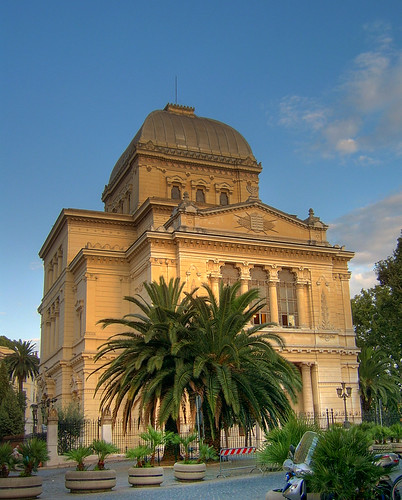
Pope to Visit Rome Synagogue in January
From the Register's blog:
The Vatican announced today that Pope Benedict XVI will visit Rome's synagogue slightly later than the expected, in the afternoon of 17th January next year.
According to a statement, the visit will coincide with the 21st Day of Deepening and Development of Catholic-Jewish Dialogue, as well as a Jewish festival.
The visit has been on the cards for sometime: papal spokesman Fr. Federico Lombardi confirmed it to the Register back in July but no date had then been fixed.
The Holy Father's visit will come after recent controversies such as the Good Friday prayer in the extraordinary form that calls for the conversion of Jews, and the lifting of the excommunication of Bishop Richard Willamson. The Pope has been trying to steer relations back on track, making a special point of thanking some Jewish leaders for their understanding following the controversy over Williamson who denies the extent of the Holocaust. He also condemned anti-Semitism and Holocaust denial during his trip to the Holy Land.
The Jewish place of worship belongs to the oldest Judaic community in Europe and one of the oldest continuous Jewish settlements in the world, dating back to 161 B.C. It was also the venue for John Paul II’s historic visit in 1986, when he became the first Pope ever to set foot inside a synagogue. His gesture helped confirm a path of friendship between Christians and Jews, in the conciliar spirit of Nostra Aetate (In Our Time), the Second Vatican Council’s declaration on relations between the Church and non-Christians.
The Vatican also announced today that the Holy Father will visit the Rome headquarters of the Food and Agriculture Organization (FAO) for the opening of the World Summit on Food Security on November 16.
Sunday, October 4, 2009
Why Are You Only a Spectator?
 I received this powerful message through the group 'Europe4Christ'. Ahead of Pope Benedict XVI's visit to Britain, what this Nigerian seminarian has to say seems especially relevant. As nasty articles and falsehoods begin to appear in the British media before the Holy Father's arrival next year, now is as good a time as any to respond by proclaiming the truth of the Church's teaching. It also appropriately coincides with the Synod on Africa which is now underway here in Rome.
 Why are you only a spectator?
Why don’t you get involved?
Why are you not proclaiming the truth?
An African Christian registers with horror the Anti-Christian climate in Europe and is astonished with what passivity European Christians accept that.
"In Western Europe, there has been a storm of critique on Christianity for a long time, an Anti-Christian trend. To have faith is seen as a pitiful situation. To say it gently, the majority of Christians waits helplessly and inactively for the total destruction of already wounded Christianity. I am not worried that the Church would not survive difficult situations (Mt 16:18) or that Christ would abandon his Church (Mt 28:20). But I worry about the degree of carelessness and apathy that Christians in Europe show in this difficult situation.
Christians meet the increasing wave of Anti-Christianity with total passivity. Because of the media, daily newspapers, magazines, TV and radio, people are on a daily basis confronted with ideologies that only deep faith and clear discernment can withstand. The question is: How do Christians react to this? What did they do until now?
I read daily newspapers and I am bewildered because of the eagerness with which journalists and editors make arbitrary statements, leap to illogical conclusions and criticize the Church in a hostile way. The passivity with which Christians react on these assaults is alarming.
Why do you observe instead of argue, defend and proclaim the truth from a rational point of view? Why not react on negative developments, especially when they turn into a dangerous ideology?
Now it is time to wake up, everyone in their way and in their environment! Let’s write! Let’s speak loudly! We have to prepare ourselves, because as Christ has already warned us: “...for the sons of this age are more shrewd in relation to their own kind than the sons of light...” (Lk 16:8)
It is not enough to wait for a miracle! We could not impede this development by waiting for a wonder from God. Why should He perform a miracle, when he already gave us the ability to act through faith and common sense?
Prayer is undeniably the first step that we have to make, but it is not enough. We have to act. We owe that to our descendants. People leave the church because they receive wrong answers to their questions. And they get these wrong answers from the wrong people.
An average European who reads daily newspapers probably will tend to lose their faith than remain a believer. It is time to let Christ lead us. Let everyone around you notice that there is a Christian. Where are you? What do you see? What do you hear? What do you know? Speak aloud! Our silence is our pain."
Kizito Chinedu Nweke
Nweke Kizito Chinedu is a seminarian originally from Nigeria and currently studying at the Pontifical University Heiligenkreuz near Vienna.
http://www.europe4christ.net/
Thursday, October 1, 2009
Pope to Visit Cyprus in 2010
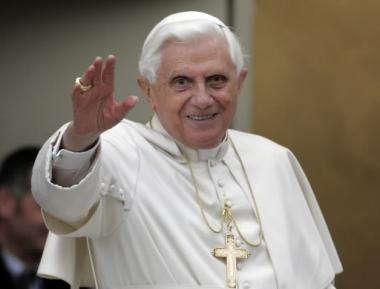
Pope Benedict XVI is to visit Cyprus in June 2010, principally because of the synod on the Middle East, scheduled for October next year.
For the full story, see our post at Terrasanta.net.
Ecumenists Worry about Vatican and Traditionalist Anglicans

There is some concern among ecumenists that Pope Benedict XVI will announce a new structure for the Traditional Anglican Communion (TAC) to come into communion with Rome next year.
They fear the Church is poaching Anglicans at a time when they are suffering from deep divisions and possible schism.
And speaking with one prominent Anglican in Rome yesterday, there is also the fear that announcing the move will take place close to, or even at the same time, as the Pope comes to Britain. It'll be a case of another Vatican PR blunder, they say, and must be avoided.
Benedict XVI is known to be fully supportive of the new structure, which will bring 400,000 TAC members into communion with Rome in one fell swoop. Talks have also been progressing well in recent months, according to sources.
But it seems odd there should be any concern when 1) the TAC is a breakaway group no longer part of the Anglican Communion (despite their name) and 2) the Vatican is not poaching TAC members but carefully and as sensitively as possible responding to their desire for full communion. Their desire for communion also is said to have the blessing of Archbishop Rowan Williams.
Still, seeing that these concerns exist, it would be wise for the CDF - the dicastery in talks with the TAC - to consult Cardinal Kasper at the council for Christian unity. Perhaps then any unnecessary damage to relations, not to mention unwanted bad press, can be mitigated.
Photo: Archbishop John Hepworth, Primate of the Traditional Anglican Communion.
Subscribe to:
Posts (Atom)
