
Monday, November 9, 2009
Apostolic Constitution Published
The Apostolic Constitution for Anglicans has been published by the Vatican and can be found here. At first glance, there don't appear to be any surprises, and the Church's teaching on celibacy remains unchanged.

Saturday, November 7, 2009
Rev. G P Taylor to Cross the Tiber
The children's author G P Taylor is to become a Catholic.
Vicar-turned-author Rev G P Taylor says he will desert the "sinking ship" Church of England, which he said was the "spiritual arm of New Labour", for Roman Catholicism.
More on this here.
Vicar-turned-author Rev G P Taylor says he will desert the "sinking ship" Church of England, which he said was the "spiritual arm of New Labour", for Roman Catholicism.
Thursday, November 5, 2009
TAC's British Province Unanimously Supports the Apostolic Constitution

The Traditional Anglican Communion’s province in Great Britain has become the first to accept Pope Benedict XVI’s Apostolic Constitution for Anglicans.
Its members voted unanimously Oct. 29th to come into communion with Rome under the terms of the new provision, which allows them to retain their Anglican patrimony.
An undated statement on the province’s website reads:
“That this Assembly, representing the Traditional Anglican Communion in Great Britain, offers its joyful thanks to Pope Benedict XVI for his forthcoming Apostolic Constitution allowing the corporate reunion of Anglicans with the Holy See, and requests the Primate and College of Bishops of the Traditional Anglican Communion to take the steps necessary to implement this Constitution.”
A statement from Bishop David Moyer of the Traditional Anglican Communion reads:
“The well-attended Assembly was a grace-filled gathering where all in attendance became aware of the movement of the Holy Spirit. The bishops, priests, ordinands, and lay representatives were brought to a place of “being in full accord and of one mind,” as St. Paul prayed for the Church in Philippi.
“The questions and concerns that were expressed in regard to what had been read and heard about the forthcoming Apostolic Constitution were addressed by Archbishop John Hepworth. Bishop Mercer and myself.
“The Resolutions unanimously passed by the Assembly were carefully written and clearly reflect TTAC’s corporate desire and intention. All present realized that the requirement for the days ahead is patience, charity, and openness to the Holy Spirit.”
Significantly, this vote took place in the birthplace of the Anglican Communion, and its members voted in favor despite the Apostolic Constitution having not yet been published.
Recently, the Traditional Anglican Communion has been looking at establishing a mother house in England, possibly a former monastery in Lincoln which hasn’t witnessed the ordination of a Catholic priest since the Reformation.
********
When there was a possibility that the news of Apostolic Constitution could be announced during the Pope visits Britain next year, Lord Monckton of Brenchley - someone who has for many years observed Catholic-Anglican relations - gave his opinion on the possibility. His remarks never got published because they were superseded by the annoucement, but they're still relevant now, I think:
"Though we are instructed by the Lord of Life to declaim His good news of salvation from the rooftops," he said, "we are also instructed not to pester those who do not wish to hear His message, but to shake their dust quietly off our feet and move on. So there will be no crowing triumphalism from us, and, however much of a publicity coup it might appear to be if the Traditional Anglicans were to rejoin the one household of the faith while Christ's Vicar on Earth was here in Britain, in my opinion neither the See of Westminster nor the Holy See would do anything to encourage that timing, precisely because it would pointlessly hurt those who are not yet ready to walk with us once again towards the Light."
Looking ahead to the Pope's visit and how it might help bring people back to the Church, he said:
"I have not the slightest doubt that what he says in the UK will have a similarly electrifying effect not only on Catholics but also on those who have begun to think that they can no longer be our separated brethren, but must once again be one with us. I pray that they, and all Christians of goodwill, will be reunited as soon and as completely as possible with the Church that Christ founded, to whose first bishops He said, "He that heareth you heareth Me."
Photo: Christopher Monckton
Saturday, October 31, 2009
Vatican Clarifies Celibacy Issue for Anglicans
The Vatican today clarified the issue of married Anglican clergy within the new structures to be set out in the forthcoming apostolic constitution.
In a lengthy statement, Vatican spokesman Father Federico Lombardi relayed an explanation of the situation given by Cardinal William Levada, prefect of the Congregation for the Doctrine of the Faith.
Cardinal Levada stated that any future married Anglican clergy wishing to come into communion under the new provision will be examined on a "case-by-case basis" and that seminarians wishing to become priests in the Catholic Church within the new structures will have to remain celibate, in keeping with current Church practice. But he said their ordinary, together with their bishops’ conference, can petition the Holy See regarding individual cases, for example in cases of married seminarians already in preparation.
"With regard to future seminarians, it was considered purely speculative whether there might be some cases in which a dispensation from the celibacy rule might be petitioned," he said. "For this reason, objective criteria about any such possibilities (e.g. married seminarians already in preparation) are to be developed jointly by the Personal Ordinariate and the Episcopal Conference, and submitted for approval of the Holy See."
This morning’s statement came in response to speculation that the Church might, under the new provision, dispense with the celibacy rule for former Anglicans, and in particular for seminarians coming from the Anglican tradition. More recently, articles in the Italian press, claimed that the seminarian celibacy issue was delaying publication of the apostolic constitution. Cardinal Levada said there was “no substance to such speculation,” adding that the delay “is purely technical in the sense of ensuring consistency in canonical language and references.”
Here is Father Lombardi’s statement in full:
“There has been widespread speculation, based on supposedly knowledgeable remarks by an Italian correspondent Andrea Tornielli, that the delay in publication of the Apostolic Constitution regarding Personal Ordinariates for Anglicans entering into full communion with the Catholic Church, announced on October 20, 2009, by Cardinal William Levada, Prefect of the Congregation for the Doctrine of the Faith, is due to more than "technical" reasons. According to this speculation, there is a serious substantial issue at the basis of the delay, namely, disagreement about whether celibacy will be the norm for the future clergy of the Provision.
Cardinal Levada offered the following comments on this speculation: "Had I been asked I would happily have clarified any doubt about my remarks at the press conference. There is no substance to such speculation. No one at the Vatican has mentioned any such issue to me. The delay is purely technical in the sense of ensuring consistency in canonical language and references. The translation issues are secondary; the decision not to delay publication in order to wait for the ‘official’ Latin text to be published in Acta Apostolicae Sedis was made some time ago.
The drafts prepared by the working group, and submitted for study and approval through the usual process followed by the Congregation, have all included the following statement, currently Article VI of the Constitution:
§1 Those who ministered as Anglican deacons, priests, or bishops, and who fulfill the requisites established by canon law and are not impeded by irregularities or other impediments may be accepted by the Ordinary as candidates for Holy Orders in the Catholic Church. In the case of married ministers, the norms established in the Encyclical Letter of Pope Paul VI Sacerdotalis coelibatus, n. 42 and in the Statement "In June" are to be observed. Unmarried ministers must submit to the norm of clerical celibacy of CIC can. 277, §1.
§2. The Ordinary, in full observance of the discipline of celibate clergy in the Latin Church, as a rule (pro regula) will admit only celibate men to the order of presbyter. He may also petition the Roman Pontiff, as a derogation from can. 277, §1, for the admission of married men to the order of presbyter on a case by case basis, according to objective criteria approved by the Holy See.
This article is to be understood as consistent with the current practice of the Church, in which married former Anglican ministers may be admitted to priestly ministry in the Catholic Church on a case by case basis. With regard to future seminarians, it was considered purely speculative whether there might be some cases in which a dispensation from the celibacy rule might be petitioned. For this reason, objective criteria about any such possibilities (e.g. married seminarians already in preparation) are to be developed jointly by the Personal Ordinariate and the Episcopal Conference, and submitted for approval of the Holy See."
Cardinal Levada said he anticipates the technical work on the Constitution and Norms will be completed by the end of the first week of November.”
In a lengthy statement, Vatican spokesman Father Federico Lombardi relayed an explanation of the situation given by Cardinal William Levada, prefect of the Congregation for the Doctrine of the Faith.
Cardinal Levada stated that any future married Anglican clergy wishing to come into communion under the new provision will be examined on a "case-by-case basis" and that seminarians wishing to become priests in the Catholic Church within the new structures will have to remain celibate, in keeping with current Church practice. But he said their ordinary, together with their bishops’ conference, can petition the Holy See regarding individual cases, for example in cases of married seminarians already in preparation.
"With regard to future seminarians, it was considered purely speculative whether there might be some cases in which a dispensation from the celibacy rule might be petitioned," he said. "For this reason, objective criteria about any such possibilities (e.g. married seminarians already in preparation) are to be developed jointly by the Personal Ordinariate and the Episcopal Conference, and submitted for approval of the Holy See."
This morning’s statement came in response to speculation that the Church might, under the new provision, dispense with the celibacy rule for former Anglicans, and in particular for seminarians coming from the Anglican tradition. More recently, articles in the Italian press, claimed that the seminarian celibacy issue was delaying publication of the apostolic constitution. Cardinal Levada said there was “no substance to such speculation,” adding that the delay “is purely technical in the sense of ensuring consistency in canonical language and references.”
Here is Father Lombardi’s statement in full:
“There has been widespread speculation, based on supposedly knowledgeable remarks by an Italian correspondent Andrea Tornielli, that the delay in publication of the Apostolic Constitution regarding Personal Ordinariates for Anglicans entering into full communion with the Catholic Church, announced on October 20, 2009, by Cardinal William Levada, Prefect of the Congregation for the Doctrine of the Faith, is due to more than "technical" reasons. According to this speculation, there is a serious substantial issue at the basis of the delay, namely, disagreement about whether celibacy will be the norm for the future clergy of the Provision.
Cardinal Levada offered the following comments on this speculation: "Had I been asked I would happily have clarified any doubt about my remarks at the press conference. There is no substance to such speculation. No one at the Vatican has mentioned any such issue to me. The delay is purely technical in the sense of ensuring consistency in canonical language and references. The translation issues are secondary; the decision not to delay publication in order to wait for the ‘official’ Latin text to be published in Acta Apostolicae Sedis was made some time ago.
The drafts prepared by the working group, and submitted for study and approval through the usual process followed by the Congregation, have all included the following statement, currently Article VI of the Constitution:
§1 Those who ministered as Anglican deacons, priests, or bishops, and who fulfill the requisites established by canon law and are not impeded by irregularities or other impediments may be accepted by the Ordinary as candidates for Holy Orders in the Catholic Church. In the case of married ministers, the norms established in the Encyclical Letter of Pope Paul VI Sacerdotalis coelibatus, n. 42 and in the Statement "In June" are to be observed. Unmarried ministers must submit to the norm of clerical celibacy of CIC can. 277, §1.
§2. The Ordinary, in full observance of the discipline of celibate clergy in the Latin Church, as a rule (pro regula) will admit only celibate men to the order of presbyter. He may also petition the Roman Pontiff, as a derogation from can. 277, §1, for the admission of married men to the order of presbyter on a case by case basis, according to objective criteria approved by the Holy See.
This article is to be understood as consistent with the current practice of the Church, in which married former Anglican ministers may be admitted to priestly ministry in the Catholic Church on a case by case basis. With regard to future seminarians, it was considered purely speculative whether there might be some cases in which a dispensation from the celibacy rule might be petitioned. For this reason, objective criteria about any such possibilities (e.g. married seminarians already in preparation) are to be developed jointly by the Personal Ordinariate and the Episcopal Conference, and submitted for approval of the Holy See."
Cardinal Levada said he anticipates the technical work on the Constitution and Norms will be completed by the end of the first week of November.”
Friday, October 30, 2009
The Son of a Saint
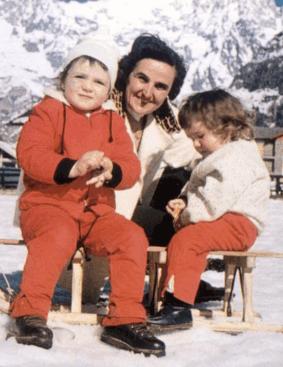
Over the summer, I had the honour of interviewing Pierluigi Molla, the eldest child of St. Gianna Beretta Molla who was canonized by John Paul II in 2004.
An edited version has now been published in the Register. Below is the full interview:
Canonized in 2004, St. Gianna Beretta Molla is one of the Church’s very rare lay saints. She rejected the possibility of having an abortion and gave her life instead to save that of her fourth child, Gianna Emanuela. Her heroic example led her to become a patron saint of the unborn, and she has a growing devoted following worldwide – reports of miracles and graces granted through her intercession continue to this day.
An interview with St. Gianna’s first child, Pierluigi, a business consultant based in Milan, in which he reflects on his mother’s example, what it’s like to be the son of a saint, and what St. Gianna would make of the struggle against abortion in the world today.
Although you were only five when your mother died, could you tell us more about her character and faith, perhaps which you came to know through your father?
As you said, when she died I was only five, but I do remember some episodes: she taught me how to ski and also I remember going with her when she went on visits as a doctor. My mother was close to the family and to her profession. At that time in the 1950s it was not common for women to have a family and also be involved in a profession, to be a doctor, and to be active helping people in associations such as Azione Cattolica [Catholic Action] and San Vincenzo [St. Vincent de Paul Society]. But at the same time, she was someone modern who liked to go skiing in the mountains, and liked music.
She lived a very full life?
A full life and also a modern one compared to the average way of life at that time. So these are my memories of my mother. Also I learned from her the faith that she transmitted to us - a trust in Providence, that you have to be committed to the values you hold. These things my father also passed on to us. Also I was able to learn about her life through the documents she left us. She left a lot of documents about her work with Azione Cattolica, and through these documents you can really understand her.
Quotes from your mother have been remembered for posterity, such as "The secret of happiness is to live moment by moment and to thank God for all that He, in His goodness, sends to us day after day." "God's Providence is in all things, it's always present." What’s the most important thing we can learn from her?
As Catholics we need to learn how to be coherent with our values and beliefs. My mother grew up in a family where she received the faith and values from her father and mother, and how to live life in a correct way. She was coherent in these values which she learned in the first years of her life, and she was coherent to the end. The second thing is to be coherent with your vocation. She once thought of leaving Italy to work in Brazil with my aunt. But she understood that her vocation was to be a mother. And, as well as being coherent with her values in her role as a mother, she also strived to be coherent in work as a doctor, and as a volunteer.
In many ways she addresses how important upbringing is, and how vital it is to be brought up properly and the faith
Yes definitely, but not only as a mother. During her time working for Azione Cattolica, a colleague of hers said she rarely did not practice what she preached. My mother would not just say you have to do this or that, she really did it. It was the same in the family and in her choice to be a mother. She was an example for us; consistent in what she believed and what she passed on to the family. She said she wanted to have a holy family and she did everything she could to be lead this holy family towards being coherent in its faith.
What is it like to be the son of a saint?
It is an extraordinary experience. Hard to imagine. What happened to the family during all the beatification and canonization processes wasn’t easy because one has to constantly recall each time the pain of her death. The beatification process meant coming back to a painful moment in my life. As you can imagine, I was only five years old and when you lose your mother at that age, it’s about the worst kind of pain that any child can experience. But at the end of the beatification process in 1994 I was compensated by seeing my mother elevated to the altars. The same thing happened in 2004 at the canonization. Now I am 53 years old. But it really was an extraordinary experience and now I feel very happy that, through the Church, I can celebrate my mother on All Saints Day instead of being sad for her the day after, on All Souls Day. So the transformation to being a saint means that now, if you remember her life, you have a feeling of happiness instead of sadness.
For me and for my sister it’s been extraordinary because what happened to us is not common. I don’t know if we are the first, but it’s really an uncommon experience to see this happen when alive, also for my father. My father is still alive and aged 97. He was with us in St. Peter’s in 2004 for the canonization of his wife. So it’s been an extraordinary experience but probably we’re not the first and only ones. We hope not, because this is a contemporary message, a really great message for the Church: how contemporary people living everyday lives can become saints. Cardinal Carlo Maria Martini said my mother is the saint of everyday life. She shows that saints can be people living ordinary lives, not extraordinary ones. For this reason, we are all ordinary people. Admittedly, my mother was an extraordinary and heroic woman, but in every ordinary things of her life she showed herself just to be living an ordinary life. My father had an extraordinary relationship with my mother. They were together for just five years but are still together.
It must be very consoling for you to have your mother as a saint because you know for sure that she is alive, that she lives on, showing it through interceding in miracles after she died.
Definitely yes, this is a great consolation. It’s also really wonderful to see how the knowledge of my mother is spreading around the world, and how many messages we’ve received from all over the globe testifying to what she’s doing today. Because she’s mediating a lot of graces. Miracles are something recognized by the Church, but these are graces and they’re really extraordinary. Two years ago I received an email from the United States. A woman had problems conceiving a child, and at the end she had two wonderful children. One of them is called Gianna because she said a prayer to my mother. So this is extraordinary; it’s like she is with us and working for the whole world.
It may be the same person, but I also know a couple in America who were trying to have children but couldn’t and then together with their priest at the time, they prayed to your mother and now they have two young children.
Fantastic. It’s not only a rare occurrence; it happens frequently. There is a church close to Genoa with an old and famous shrine, Madonna della Guardia. A priest there put up a picture of my mother in the shrine 15 years ago, and it’s incredible how now it’s now completely full of pink and blue ribbons. This is an Italian tradition – to hang up these ribbons on the outside a house when a new child is born. This shrine is full of these kinds of messages, of graces received through my mother.
Could you tell us a little about Gianna Emanuela?
Gianna is a doctor and studied medicine like my mother. She is a geriatric specialist not a pediatric doctor like my mother. Now she is taking care of my father. Up until 6 years ago he was completely active, but six years ago he started having problems. So Gianna decided to leave her job in a public hospital to take care of him. She also helps to run my mother’s foundation. My father founded the foundation which is a family charity in honor of my mother, and various people write to it from all around the world, giving materials or asking for help. So Gianna is working for that. This is a good way I think to honor my mother and father. Up until six years ago all this was done by my father. He had been completely absorbed in this work over the past 15 years. Once he retired from his job he took care of all the necessities relating to the beatification and canonization causes. As you can imagine, and as I sad before, to be a family, to be a witness to a beatification is not only important but it also involves an immense amount of work. Traditionally, saints come from priestly orders or convents and so they have a lot of people working on these causes for free. But in a family we have to work hard, and also for free.
So it’s been a bit of a burden but a happy one?
Yes.
How does your sister Gianna Emanuela look upon what your mother did for her?
It is amazing. She was only with my mother six days but she received through us and my father a sense of what really happened. And yes, she’s completely grateful to my mother because through giving her life, she is here. But what my mother did for Gianna she would have done for me or my other sisters, because for my mother, Gianna has every right to live as we have.
When Sarah Palin was chosen to run as Vice President of the United States, some referred to your mother as an example of someone who could bring up her relatively large family in the Catholic faith and yet live a very professional and busy life. Are you happy with that comparison?
I didn’t know about this, about the comparison with Sarah Palin. I only know what I read in the papers. I think my mother showed at that time in the 1950s that it was possible for a woman to be coherent with her values and to do well in her life in terms of her profession and family. This is the example of my mother, but I don’t know if it’s really consistent with the life of Sarah Palin. It’s not only Sarah Palin but I think there are a lot of women and many other great saints of the Church who have shown how life can be sanctified through a profession. There’s St. Josemaria Escriva, for instance, who said you can be a good father, and also be sanctified through your profession. So my mother isn’t the only example in the Church of this kind of coherence and commitment to family and professional life. There are many examples.
It also depends on the person?
Yes, and on their experience and history. In my mother’s case, she was completely happy in her family and professional life. She was coherent with this principle and applied it to everything she wanted to do. One of my mother’s favorite expressions was to do everything in depth, not superficially, and not to stop and only do 50 percent. She wasn’t an extraordinary intellectual and at school she got average results. She was not a champion, but she tried her best.
Relaxed abortion laws mostly came into force in the western world after your mother died. Do you think she’d be campaigning against these laws if she were alive today?
She probably would be, as someone who was committed to Azione Cattolica. As someone who had to give a good example, who tried to be coherent in her commitment to her faith, she would have done everything she could to prevent an abortion from taking place. I think she would have also been committed to this in her job, to be coherent with this aspect of her faith. I saw in yesterday’s Corriere della Sera two pages devoted to a meeting between the Pope and Obama. The main aspect discussed was abortion, so it shows the real value these issues have at the highest level. Because if you agree with this kind of value, you must also be coherent in the policies you make. I was really surprised that Obama wanted to reduce abortion. In the last 10 years of presidential campaigns in the US, abortion has figured highly, so it is of real value.
Certainly my mother represented this value. My mother was a person who lived in the 1950s, died in 1962 and yet the message she left is still very current and topical. Not only in bioethics and abortion, but also in matters relating to the economy and moral values. If we agree on these values and every leader applies these principles to daily life, we can change the general situation.
Thursday, October 29, 2009
Seminarian Issue Delaying Apostolic Constitution
The delay in publishing the Apostolic Constitution is due not so much to translation problems as the more weighty issue of priestly celibacy.
According to two reliably informed Italian newspapers, Il Giornale and Il Foglio, canon lawyers are continuing to define what has been a particularly unclear aspect of the new provision: whether married Anglicans could train as seminarians.
Andrea Tornielli of Il Giornale reports that over the last few days, the Pontifical Council for Legislative Texts has been working to clarify this point. He writes that “everything suggests” seminarians in these future Anglo-Catholic communities “will have to be celibate like all their colleagues in the Latin Catholic Church.”
Both newspapers also report the Holy Father would have preferred the publication of the Apostolic Constitution to have taken place at the same time as last week’s press conference, mainly to avoid any repeat of the mishandling of his decision to lift the excommunications on four Lefebvrist bishops earlier this year.
But as Cardinal William Levada had already informed the bishops of England and Wales and the Archbishop of Canterbury of the provision, and the date for their joint press conference in London had already been disclosed, it would have been impossible to keep the matter under wraps, Tornielli writes. The Vatican therefore decided to go ahead with the press conference, even though the precise canonical details of the Constitution hadn’t yet been worked out.
According to two reliably informed Italian newspapers, Il Giornale and Il Foglio, canon lawyers are continuing to define what has been a particularly unclear aspect of the new provision: whether married Anglicans could train as seminarians.
Andrea Tornielli of Il Giornale reports that over the last few days, the Pontifical Council for Legislative Texts has been working to clarify this point. He writes that “everything suggests” seminarians in these future Anglo-Catholic communities “will have to be celibate like all their colleagues in the Latin Catholic Church.”
Both newspapers also report the Holy Father would have preferred the publication of the Apostolic Constitution to have taken place at the same time as last week’s press conference, mainly to avoid any repeat of the mishandling of his decision to lift the excommunications on four Lefebvrist bishops earlier this year.
But as Cardinal William Levada had already informed the bishops of England and Wales and the Archbishop of Canterbury of the provision, and the date for their joint press conference in London had already been disclosed, it would have been impossible to keep the matter under wraps, Tornielli writes. The Vatican therefore decided to go ahead with the press conference, even though the precise canonical details of the Constitution hadn’t yet been worked out.
Tuesday, October 27, 2009
Cardinal Kasper To Be Replaced Soon?
Word around the Vatican is that Cardinal Walter Kasper is to retire and be replaced by Mons. Gerhard Ludwig Mueller, the Bishop of Regensburg, Germany.
Pope Benedict XVI is expected to make the announcement on Saturday, according to one source.
If true, the Pontifical Council for Promoting Christian Unity will have had two German presidents in succession.
Bishop Mueller is known as a traditionalist and doctrinally conservative.
However, he criticized the Pope for lifting the excommunications on the four Lefebvrite bishops in January this year, one of whom was Bishop Richard Williamson who denied the extent of the Holocaust.
Archbishop Mueller criticized the Pope for extending "both hands to a marginal group" and later banned Bishop Williamson from his diocesan churches and facilities.
The Holy Father was unaware of Williamson's anti-Semitic views until after he had made his decision.
UPDATE: The diocese of Regensburg has denied the rumours, which originally started in the German media, saying as far as they know, no decision has yet been taken. However, Cardinal Kasper is expected to be replaced in the next few months having passed the retirement age of cardinals.
Pope Benedict XVI is expected to make the announcement on Saturday, according to one source.
If true, the Pontifical Council for Promoting Christian Unity will have had two German presidents in succession.
Bishop Mueller is known as a traditionalist and doctrinally conservative.
However, he criticized the Pope for lifting the excommunications on the four Lefebvrite bishops in January this year, one of whom was Bishop Richard Williamson who denied the extent of the Holocaust.
Archbishop Mueller criticized the Pope for extending "both hands to a marginal group" and later banned Bishop Williamson from his diocesan churches and facilities.
The Holy Father was unaware of Williamson's anti-Semitic views until after he had made his decision.
UPDATE: The diocese of Regensburg has denied the rumours, which originally started in the German media, saying as far as they know, no decision has yet been taken. However, Cardinal Kasper is expected to be replaced in the next few months having passed the retirement age of cardinals.
Subscribe to:
Posts (Atom)
