
Likening Dawkins and others to the Nazis is a bit of a cheap shot but there is a precedent in history.
According to Massimo Introvigne of Corriere della Sera, the Nazis did in fact try to discredit the Catholic Church by involving it in a scandal of pedophile priests. In 1937, he writes, propaganda minister Joseph Goebbels organized such a campaign after Pope Pius XI severely criticised the Nazi regime.
The parallels are disturbing. Just as cases of pedophilia are suddenly coming to light after decades since they occurred, so Goebbels instructed the Gestapo "to “reopen” the cases from 1936 and also older cases, constantly recalling them to public opinion," according to Introvigne.
Goebbels also ordered the Gestapo to find witnesses willing to accuse a certain number of priests, threatening them with immediate arrest if they didn’t collaborate, even if they were children.
It's an interesting article worth reading, and you won't of course see it reported in many other places.
Friday, April 23, 2010

Thursday, April 22, 2010
Dawkins Video Parody
This has already done the rounds, but if you haven't seen it yet, it's a funny parody of the ridiculous Dawkins-Hitchens stunt to arrest the Pope in Britain.
I hear the film company is trying to take these down so apologies if the link doesn't work.
I hear the film company is trying to take these down so apologies if the link doesn't work.
Beware the LibDems
Bishop Malcolm McMahon of Nottingham is warning that a victory by the Liberal Democrats in the May 6 general election could threaten the existence of Catholic schools. The party has pledged to make it illegal for religious schools to select students on the basis of their faith.
“Catholics should give it very serious consideration before they vote Liberal Democrat,” said Bishop McMahon. “Our position is that every person should have the right to bring up their children according to their consciences.”
That's not all. A LibDem win would threaten religious freedom and the right to life in general. The most militant secularists in the last parliament weren't Labour MPs but LibDem ones.
Yet Britain has, until recently, historically been an example to the world when it comes to religious freedom. Having just got back from Malta, I was interested to learn that in contrast to their other rulers, the British not only allowed Catholicism to continue but actually helped it prosper. The same approach to religion could be seen in just about every other colony.
“Catholics should give it very serious consideration before they vote Liberal Democrat,” said Bishop McMahon. “Our position is that every person should have the right to bring up their children according to their consciences.”
That's not all. A LibDem win would threaten religious freedom and the right to life in general. The most militant secularists in the last parliament weren't Labour MPs but LibDem ones.
Yet Britain has, until recently, historically been an example to the world when it comes to religious freedom. Having just got back from Malta, I was interested to learn that in contrast to their other rulers, the British not only allowed Catholicism to continue but actually helped it prosper. The same approach to religion could be seen in just about every other colony.
Wednesday, April 21, 2010
Weigel Takes Hans Kueng to Task
 George Weigel has excoriated Hans Kueng in this welcome article published today by First Things.
 It comes in response to Kueng's open letter to bishops, published in the Irish Times and aimed at fomenting dissent and disapproval of Benedict XVI. That he would see himself in a position to take such an initiative in relation to bishops says rather a lot about Kueng.
Weigel begins his piece by recalling how Kueng, when a professor in the 1960s, bought himself a Mercedes convertible, assumed to have a been the fruit of the success of his book. This is well known and some might think it irrelevant, but I believe it's important as it gives further insight into his character.
As I found researching my recent piece on Christopher Hitchens, one can discover a fair amount about a person's anger and dissent by studying their past.
Perhaps it's time someone took a closer look at Kueng's.
Incidentally, two things I missed out of the Hitchens piece which should probably have been included: firstly that he is a heavy drinker (though this is well known), but secondly I've since discovered that his mother and her ex-Anglican vicar lover took their own lives after becoming caught up in the cult of Maharishi Mahesh Yogi, "the sinister windbag who had brought enlightenment to the Beatles in the summer of love," as Hitchens puts it.
Yet more fuel to stoke Hitchens's hatred of religion, though ironically the Catholic Church was the only serious critic of the "free love" mentality of the 60s and 70s.
Picture: a caricature of Hans Kueng I drew for The Tablet a year or two ago.
Friday, April 16, 2010
Hitchens and the Pope
I've written a short expose of Christopher Hitchens, along with an analysis of the strange plan he and Richard Dawkins have cooked up to arrest the Pope when he comes to Britain.
Hitchens's past cannot but have an effect on how he sees religion. Someone said Thomas Merton also had a past, as of course did many great saints. Yes, but the difference is that they eventually turned to Christ and then walked in the light.
On the Pope's visit, I agree with this assessment of Father Z, that my fellow Brits will be pleasantly surprised when he sets foot in the country:
As with everywhere he visits, he has a great tendency to disarm his critics by his meek, humble and completely unimposing personality.
It's also his 83rd birthday today - Happy Birthday Holy Father!
Hitchens's past cannot but have an effect on how he sees religion. Someone said Thomas Merton also had a past, as of course did many great saints. Yes, but the difference is that they eventually turned to Christ and then walked in the light.
On the Pope's visit, I agree with this assessment of Father Z, that my fellow Brits will be pleasantly surprised when he sets foot in the country:
* He is not going to fit the image promoted by the MSM (mass media) and their twisted expectations.
* They will see a man who is joyful and serene.
* He will not be depressed or morose or crushed or over-burdened.
* He will not soften his message to the English people about the need for God in their lives.
* He will not dodge hard issues, such as the clerical abuse controversy, but will confront them head on.
* People will flock to see him and listen to what he has to say and his message will make more sense than what they get from the MSM.
* Vocations to the priesthood and religious will rise after his visit.
As with everywhere he visits, he has a great tendency to disarm his critics by his meek, humble and completely unimposing personality.
It's also his 83rd birthday today - Happy Birthday Holy Father!
Tuesday, April 13, 2010
Journalists Abandon Standards to Attack the Pope
Journalists such as myself will of course make mistakes, but when so many are made in a story, you've got to start wondering if there's not a hidden agenda. In much of the mass media's coverage of the sexual abuse scandal (The London Times, New York Times, Los Angeles Times, Associated Press, NBC), it's quite clear there is.
Here's an excellent expose of a recent story, by Phil Lawler of Catholic World News:
Journalists abandon standards to attack the Pope
We're off and running once again, with another completely phony story that purports to implicate Pope Benedict XVI in the protection of abusive priests.
The "exclusive" story released by AP yesterday, which has been dutifully passed along now by scores of major media outlets, would never have seen the light of day if normal journalistic standards had been in place. Careful editors should have asked a series of probing questions, and in every case the answer to those questions would have shown that the story had no "legs."
First to repeat the bare-bones version of the story: in November 1985, then-Cardinal Ratzinger signed a letter deferring a decision on the laicization of Father Stephen Kiesle, a California priest who had been accused of molesting boys.
Now the key questions:
• Was Cardinal Ratzinger responding to the complaints of priestly pedophilia? No. The Congregation for the Doctrine of the Faith, which the future Pontiff headed, did not have jurisdiction for pedophile priests until 2001. The cardinal was weighing a request for laicization of Kiesle.
• Had Oakland's Bishop John Cummins sought to laicize Kiesle as punishment for his misconduct? No. Kiesle himself asked to be released from the priesthood. The bishop supported the wayward priest's application.
• Was the request for laicization denied? No. Eventually, in 1987, the Vatican approved Kiesle's dismissal from the priesthood.
• Did Kiesle abuse children again before he was laicized? To the best of our knowledge, No. The next complaints against him arose in 2002: 15 years after he was dismissed from the priesthood.
• Did Cardinal Ratzinger's reluctance to make a quick decision mean that Kiesle remained in active ministry? No. Bishop Cummins had the authority to suspend the predator-priest, and in fact he had placed him on an extended leave of absence long before the application for laicization was entered.
• Would quicker laicization have protected children in California? No. Cardinal Ratzinger did not have the power to put Kiesle behind bars. If Kiesle had been defrocked in 1985 instead of 1987, he would have remained at large, thanks to a light sentence from the California courts. As things stood, he remained at large. He was not engaged in parish ministry and had no special access to children.
• Did the Vatican cover up evidence of Kiesle's predatory behavior? No. The civil courts of California destroyed that evidence after the priest completed a sentence of probation-- before the case ever reached Rome.
So to review: This was not a case in which a bishop wanted to discipline his priest and the Vatican official demurred. This was not a case in which a priest remained active in ministry, and the Vatican did nothing to protect the children under his pastoral care. This was not a case in which the Vatican covered up evidence of a priest's misconduct. This was a case in which a priest asked to be released from his vows, and the Vatican-- which had been flooded by such requests throughout the 1970s -- wanted to consider all such cases carefully. In short, if you're looking for evidence of a sex-abuse crisis in the Catholic Church, this case is irrelevant.
We Americans know what a sex-abuse crisis looks like. The scandal erupts when evidence emerges that bishops have protected abusive priests, kept them active in parish assignments, covered up evidence of the charges against them, and lied to their people. There is no such evidence in this or any other case involving Pope Benedict XVI.
Competent reporters, when dealing with a story that involves special expertise, seek information from experts in that field. Capable journalists following this story should have sought out canon lawyers to explain the 1985 document-- not merely relied on the highly biased testimony of civil lawyers who have lodged multiple suits against the Church. If they had understood the case, objective reporters would have recognized that they had no story. But in this case, reporters for the major media outlets are far from objective.
The New York Times-- which touched off this feeding frenzy with two error-riddled front-page reports-- seized on the latest "scoop" by AP to say that the 1985 document exemplified:
…the sort of delay that is fueling a renewed sexual abuse scandal in the church that has focused on whether the future pope moved quickly enough to remove known pedophiles from the priesthood, despite pleas from American bishops.
Here we have a complete rewriting of history. Earlier in this decade, American newspapers exposed the sad truth that many American bishops had kept pedophile priests in active ministry. Now the Times, which played an active role in exposing that scandal, would have us believe that the American bishops were striving to rid the priesthood of the predators, and the Vatican resisted!
No, what is "fueling a renewed sexual abuse scandal" is a media frenzy. There is a scandal here, indeed, but it's not the scandal you're reading about in the mass media. The scandal is the complete collapse of journalistic standards in the handling of this story.
Here's an excellent expose of a recent story, by Phil Lawler of Catholic World News:
Journalists abandon standards to attack the Pope
We're off and running once again, with another completely phony story that purports to implicate Pope Benedict XVI in the protection of abusive priests.
The "exclusive" story released by AP yesterday, which has been dutifully passed along now by scores of major media outlets, would never have seen the light of day if normal journalistic standards had been in place. Careful editors should have asked a series of probing questions, and in every case the answer to those questions would have shown that the story had no "legs."
First to repeat the bare-bones version of the story: in November 1985, then-Cardinal Ratzinger signed a letter deferring a decision on the laicization of Father Stephen Kiesle, a California priest who had been accused of molesting boys.
Now the key questions:
• Was Cardinal Ratzinger responding to the complaints of priestly pedophilia? No. The Congregation for the Doctrine of the Faith, which the future Pontiff headed, did not have jurisdiction for pedophile priests until 2001. The cardinal was weighing a request for laicization of Kiesle.
• Had Oakland's Bishop John Cummins sought to laicize Kiesle as punishment for his misconduct? No. Kiesle himself asked to be released from the priesthood. The bishop supported the wayward priest's application.
• Was the request for laicization denied? No. Eventually, in 1987, the Vatican approved Kiesle's dismissal from the priesthood.
• Did Kiesle abuse children again before he was laicized? To the best of our knowledge, No. The next complaints against him arose in 2002: 15 years after he was dismissed from the priesthood.
• Did Cardinal Ratzinger's reluctance to make a quick decision mean that Kiesle remained in active ministry? No. Bishop Cummins had the authority to suspend the predator-priest, and in fact he had placed him on an extended leave of absence long before the application for laicization was entered.
• Would quicker laicization have protected children in California? No. Cardinal Ratzinger did not have the power to put Kiesle behind bars. If Kiesle had been defrocked in 1985 instead of 1987, he would have remained at large, thanks to a light sentence from the California courts. As things stood, he remained at large. He was not engaged in parish ministry and had no special access to children.
• Did the Vatican cover up evidence of Kiesle's predatory behavior? No. The civil courts of California destroyed that evidence after the priest completed a sentence of probation-- before the case ever reached Rome.
So to review: This was not a case in which a bishop wanted to discipline his priest and the Vatican official demurred. This was not a case in which a priest remained active in ministry, and the Vatican did nothing to protect the children under his pastoral care. This was not a case in which the Vatican covered up evidence of a priest's misconduct. This was a case in which a priest asked to be released from his vows, and the Vatican-- which had been flooded by such requests throughout the 1970s -- wanted to consider all such cases carefully. In short, if you're looking for evidence of a sex-abuse crisis in the Catholic Church, this case is irrelevant.
We Americans know what a sex-abuse crisis looks like. The scandal erupts when evidence emerges that bishops have protected abusive priests, kept them active in parish assignments, covered up evidence of the charges against them, and lied to their people. There is no such evidence in this or any other case involving Pope Benedict XVI.
Competent reporters, when dealing with a story that involves special expertise, seek information from experts in that field. Capable journalists following this story should have sought out canon lawyers to explain the 1985 document-- not merely relied on the highly biased testimony of civil lawyers who have lodged multiple suits against the Church. If they had understood the case, objective reporters would have recognized that they had no story. But in this case, reporters for the major media outlets are far from objective.
The New York Times-- which touched off this feeding frenzy with two error-riddled front-page reports-- seized on the latest "scoop" by AP to say that the 1985 document exemplified:
…the sort of delay that is fueling a renewed sexual abuse scandal in the church that has focused on whether the future pope moved quickly enough to remove known pedophiles from the priesthood, despite pleas from American bishops.
Here we have a complete rewriting of history. Earlier in this decade, American newspapers exposed the sad truth that many American bishops had kept pedophile priests in active ministry. Now the Times, which played an active role in exposing that scandal, would have us believe that the American bishops were striving to rid the priesthood of the predators, and the Vatican resisted!
No, what is "fueling a renewed sexual abuse scandal" is a media frenzy. There is a scandal here, indeed, but it's not the scandal you're reading about in the mass media. The scandal is the complete collapse of journalistic standards in the handling of this story.
Saturday, April 10, 2010
Another Excellent Commentary on the Crisis
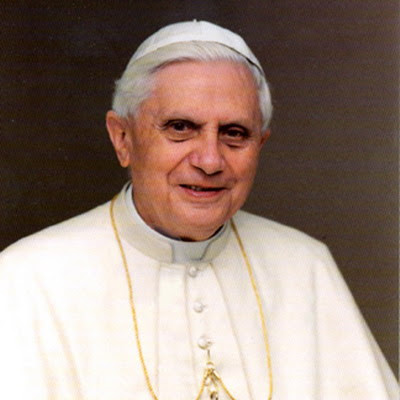 This one doesn't have the useful detail about how the Vatican works by Fr. Radcliffe (below), but contains other very commendable points.
In Defense of the Pope
by James Conley
First Things
Over these past few weeks a flurry of stories have appeared in the media regarding clergy sexual abuse and its mishandling by Catholic bishops and even the pope himself. Much of this information is dated. The fact that these stories were triggered in part by an attorney with a long and lucrative financial history of litigating the Catholic community and were pressed with such enthusiasm by editors during Holy Week—and in particular on Good Friday—could hardly have been a coincidence.
Sexual abuse of children cries to heaven for justice. It violates everything that is good and holy. It mocks everything Christ said in the gospels. Jesus compared the Kingdom of Heaven to the innocence of a little child. And for a Catholic priest to commit a crime and a sin like this is profoundly evil.
But sexual abuse is not uniquely or even predominantly a Catholic problem. It is a sickness widespread in our culture and also a global problem. Most studies indicate that in the United States as much as 60 percent of all sexual abuse of minors takes place within families.
It's certainly true that some Catholic priests perpetrated this evil on the innocent in years past. And too many Catholic bishops ignored or failed to grasp the gravity of this crime in addressing the problem. These men are gravely accountable to God for their actions.
But no other community or institution has examined itself on this painful issue as rigorously as the Catholic Church. No other group has put into place zero tolerance policies for sexual abuse and created safe environment programs like the Catholic Church in America, to the point where the Church is one of the most secure environments anywhere for children and young people.
And no person has done more to rid the Church of the evil of sexual abuse than the current successor of St. Peter, Benedict XVI. As archbishop of Munich thirty years ago, then as the Prefect for the Congregation for the Doctrine of the Faith and now as the Vicar of Christ, Pope Benedict has always been dedicated to his responsibilities of purifying the Church in this area.
I served as an official in the Vatican's Congregation for Bishops for ten years. In that capacity, I worked alongside then cardinal Joseph Ratzinger who was a member of our Congregation. During my last year in Rome I served under the same good man after his election as pope. I learned from direct, first-hand experience that Benedict XVI is truly a man of God, a gift to the Church and a shepherd after the heart of the Good Shepherd.
Benedict XVI named me a bishop in April 2008. As a brother bishop to the bishop of Rome, it pains my heart and should wound the heart of all Catholics, to see the vindictive way he has been treated in the media. The editorial cartoons, the opinion pieces, the vicious attacks on his person and reputation, the disinformation and twisting of facts—all these abuses against responsible press freedom have been repugnant.
No other world religious leader, Jewish, Muslim or other, would be treated in this way. Contempt for the Catholic Church—and don't be fooled; the contempt is directed not just at Church leaders, but at ordinary believers as well—no matter how vulgar or bitter, is the last acceptable prejudice. Why? Because the Catholic Church is one of the few remaining voices that speaks effectively against the moral confusion of our day. The Catholic faith does not and will not bless the damaging moral path some people now seem to prefer.
Let me close with the words of Benedict from his Holy Thursday Chrism Mass in Rome:
"I am always struck by the passage in the Acts of the Apostles which recounts that after the Apostles had been whipped by order of the Sanhedrin, they "rejoiced that they were counted worthy to suffer dishonor for the name of Jesus" (Acts 5:41). Anyone who loves is ready to suffer for the beloved and for the sake of his love, and in this way he experiences a deeper joy. The joy of the martyrs was stronger than the torments inflicted on them."
Discipleship involves suffering. But suffering does accomplish a powerfully good thing: It clarifies who is willing to suffer for Christ's Church and her mission, and who is not.
James D. Conley is auxiliary bishop of Denver.
Subscribe to:
Posts (Atom)
